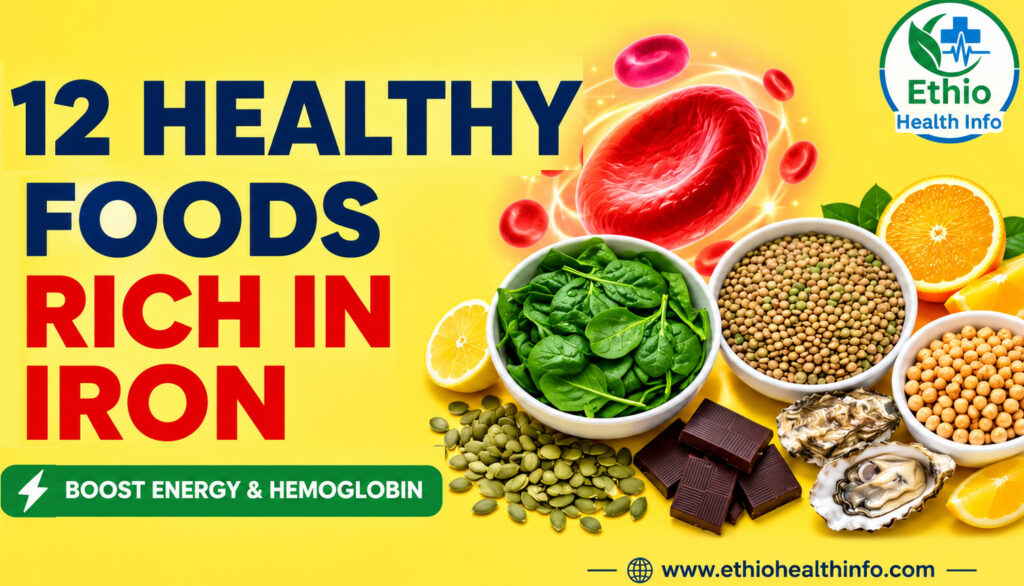
12 Science-Backed Iron-Rich Foods to Boost Energy & Prevent Anemia
Fatigue, unexplainable physical exhaustion, brittle nails, pale skin, and sudden bouts of dizziness are often brushed aside as signs of a stressful lifestyle. However, clinical pathology frequently uncovers a much deeper physiological deficit: iron deficiency. Iron is an indispensable trace element that governs vital metabolic, cellular, and oxygen-transport mechanisms across the human body.
Heme vs. Non-Heme Iron: Understanding Bioavailability
To optimize your nutritional intake, it is critical to recognize that dietary iron does not exist as a single uniform compound. Clinicians classify nutritional iron into two distinct physiological categories:
- Heme Iron: Derived strictly from animal hemoglobin and myoglobin (red meat, poultry, and seafood). Heme iron possesses superior bioavailability, with mucosal absorption rates ranging between 15% and 35%. Its intestinal uptake is relatively unaffected by other dietary compounds.
- Non-Heme Iron: Found in plant-derived foods, grains, legumes, nuts, and iron-fortified staples. Non-heme iron features an absorption window ranging from 2% to 20% and requires specific biochemical conditions (such as the presence of ascorbic acid) to optimize its conversion and enteric transit.
12 Nutrient-Dense Foods Packed with Bioavailable Iron
Integrating a broad spectrum of both heme and non-heme whole foods into your culinary routine ensures optimal iron saturation, steady adenosine triphosphate (ATP) cellular energy, and robust immunological surveillance.
1. Spinach
Spinach is a celebrated green leafy vegetable providing approximately 2.7 mg of non-heme iron per 100 grams of cooked leaves. While spinach contains natural oxalic acid (which can bind minerals), it also harbors intrinsic Vitamin C, promoting an organic environment for mineral absorption when gently steamed.
2. Grass-Fed Red Meat
Lean beef, venison, and lamb represent premiere sources of highly bioavailable heme iron. A 100-gram serving of lean ground beef yields roughly 2.7 mg of iron, alongside high-biological-value protein, bioavailable zinc, selenium, and neuroprotective B-complex vitamins.
3. Poultry (Chicken & Turkey)
Poultry delivers a dual nutritional benefit: lean protein with moderate caloric density. Selecting darker cuts (such as drumsticks and thighs) provides considerably higher concentrations of heme iron (around 1.4 mg per 100g) compared to skinless breast portions.
4. Beef Liver & Organ Meats
Organ meats, particularly beef liver, are recognized as nutritional powerhouses. A single 100-gram portion of beef liver provides an exceptional 6.5 mg of heme iron (over 36% of the Recommended Daily Intake), coupled with abundant preformed Vitamin A, copper, and Vitamin B12.
5. Brown & Green Lentils
Lentils are an indispensable cornerstone for plant-based, vegetarian, and vegan nutritional protocols. One cup of boiled lentils (approx. 198g) provides an impressive 6.6 mg of non-heme iron, flanked by 15.6 grams of soluble dietary fiber and cardiovascular-protective folate.
6. Organic Tofu
Crafted from curdled soybean milk, firm tofu provides roughly 3.4 mg of iron per 100-gram serving. In addition to delivering all nine essential amino acids, tofu offers substantial reserves of bioavailable calcium, phosphorus, and magnesium.
7. Shellfish (Clams, Oysters & Mussels)
Marine shellfish represent an astonishingly potent dietary source of iron. In particular, 100 grams of cooked clams can supply up to 3 mg (and certain varieties substantially more) of pure heme iron, in tandem with omega-3 fatty acids and superior concentrations of Vitamin B12.
8. Raw Pumpkin Seeds
Pumpkin seeds (pepitas) are a nutrient-dense snack, with just a single 28-gram (1-ounce) handful providing approximately 2.5 mg of non-heme iron. They are additionally loaded with elemental zinc, manganese, and magnesium to support cellular repair.
9. Quinoa
Quinoa is a gluten-free ancient seed with a complete amino acid profile. One cup of cooked quinoa delivers roughly 2.8 mg of non-heme iron. Furthermore, it contains higher concentrations of dietary antioxidants (quercetin and kaempferol) compared to standard cultivated grains.
10. Steamed Broccoli
A 1-cup serving of cooked broccoli contributes about 1 mg of iron. Crucially, that exact same portion provides over 100% of the daily physiological requirement for Vitamin C, transforming broccoli into a self-facilitating, iron-absorbing nutritional matrix.
11. Dark Chocolate (70%+ Cacao)
High-percentage dark chocolate is remarkably rich in bioavailable trace minerals. A 28-gram serving of premium dark chocolate contains nearly 3.4 mg of iron, paired with potent flavanols that facilitate endothelial nitric oxide production and cardiovascular resilience.
12. Chickpeas (Garbanzo Beans)
Whether blended into hummus or tossed over crisp greens, chickpeas provide roughly 4.7 mg of non-heme iron per cooked cup. Their balanced complex carbohydrate and resistant starch profiles simultaneously regulate postprandial glycemic excursions.
Nutritional Comparison Table: Iron Density at a Glance
| Dietary Source | Serving Size | Estimated Iron Content | Classification |
|---|---|---|---|
| Beef Liver | 100g (cooked) | 6.5 mg | Heme (High Bioavailability) |
| Boiled Lentils | 1 cup (198g) | 6.6 mg | Non-Heme |
| Cooked Chickpeas | 1 cup (164g) | 4.7 mg | Non-Heme |
| Firm Tofu | 100g | 3.4 mg | Non-Heme |
| Dark Chocolate (70-85%) | 28g (1 oz) | 3.4 mg | Non-Heme |
| Oysters / Clams | 100g (cooked) | 3.0 – 5.0 mg | Heme |
| Cooked Quinoa | 1 cup (185g) | 2.8 mg | Non-Heme |
| Lean Ground Beef | 100g (cooked) | 2.7 mg | Heme |
| Cooked Spinach | 100g | 2.7 mg | Non-Heme |
| Pumpkin Seeds | 28g (1 oz) | 2.5 mg | Non-Heme |
💡 Clinical Strategy: Maximizing Iron Absorption
To dramatically enhance your intestinal iron bioavailability, implement the following evidence-based nutritional synergies:
- Pair with Vitamin C (Ascorbic Acid): Ascorbic acid reduces ferric iron (Fe³⁺) to ferrous iron (Fe²⁺), the exact valence state required for enterocyte carrier protein uptake. Combine lentils, beans, or spinach with lemon juice, bell peppers, or fresh tomatoes.
- Avoid Polyphenol and Tannin Interference: Black tea, coffee, and red wine contain polyphenols and tannins that strongly chelate iron, drastically attenuating non-heme absorption. Allow an interval of at least 60 to 90 minutes between consuming iron-rich meals and caffeinated beverages.
- Separate High Calcium Doses: Calcium competitively inhibits both heme and non-heme iron across the intestinal brush border. Avoid taking high-potency calcium supplements simultaneously with primary iron-rich meals.
Conclusion: Building a Sustainable Nutritional Strategy
Ensuring adequate biological iron stores is foundational to eliminating chronic fatigue, sustaining cognitive sharpness, and defending the vascular tree against systemic hypoxia. Whether you rely predominantly on bioavailable animal proteins or nutrient-dense plant sources, deliberately pairing non-heme minerals with ascorbic acid will help safeguard optimal hemoglobin synthesis and sustained vitality.
Scientific References & Peer-Reviewed Sources
- Healthline: 11 Healthy Foods That Are High in Iron. https://www.healthline.com/nutrition/iron-rich-foods
- Medical News Today: Top 12 Iron-Rich Foods for Health. https://www.medicalnewstoday.com/articles/322857
- WebMD: Iron-Rich Foods for a Healthy Diet. https://www.webmd.com/diet/iron-rich-foods
- Harvard T.H. Chan School of Public Health: Iron: An Essential Nutrient. https://www.hsph.harvard.edu/nutritionsource/iron/
- Cleveland Clinic: Foods High in Iron and Why You Need Them. https://health.clevelandclinic.org/iron-rich-foods